

There are things children do that require correction.
If your child deliberately hits their sibling, lies to you, breaks an important rule, or behaves disrespectfully, you don’t have to smile sweetly and say, “Express yourself, darling.”
Please.
Children need adults to teach them that they cannot just do whatever they like.
But the thing is, not everything that frustrates you as a parent is bad behavior, and here are six of them:
You Should Never Punish a Child For These 6 Things
1. Telling You the Truth About Something Bad They Did

Some months ago, my daughter came to me and said, “Mom, I’m sorry. I broke your favorite coffee mug.”
And yes, it really was one of my favorite mugs.
Was I happy that she broke it?
Of course not.
Those children have a talent for breaking the things nobody asked them to touch.
But something was more important to me than that mug: she came to tell me herself.
She could have hidden the pieces or kept quiet and waited for me to discover it.
Instead, she walked up to me, confessed what she had done, and apologized.
Why would I punish the very behavior I want to see more of?
This is where we parents sometimes get it wrong.
A child does something wrong, gathers enough courage to tell us the truth, and we react so harshly that the lesson they learn is, “Next time, don’t tell Mommy.”
I know that telling the truth doesn’t automatically erase consequences.
If your child deliberately breaks something, steals, hurts someone, or breaks an important rule, you can still address what they did.
Honesty doesn’t make wrongdoing right, but never make lying feel safer than telling you the truth.
2. Crying or Showing Strong Emotions

“Stop crying before I give you something to cry about.”
The unofficial anthem of many childhoods. 😂
Imagine saying this to an adult.
Your friend is crying because she’s upset, and you say, “If you don’t stop those tears right now, I’ll make your situation worse.”
You’d sound unhinged.
Yet when the person crying is five, we expect them to switch off their emotions as if there were a button behind their ear.
Children cry because they’re angry or disappointed.
Sometimes the reason looks ridiculous to us, but the emotion is very real to them.
You don’t have to agree with the reason for your child’s emotions to allow them to have the emotion.
Your child can be angry that you said no, and the answer can still remain no.
Feelings are allowed; bad behavior isn’t.
Emotional regulation is something we teach, not something we punish into them.
3. Making an Honest Mistake
Children are going to make mistakes. A freaking lot of them.
They’ll spill drinks five minutes after you tell them to be careful.
They’ll lose the brand-new water bottle you bought three days ago.
They’ll knock something over while playing.
They’ll forget their homework at home.
They’ll put something somewhere and have absolutely no idea where it is….
Sometimes, as a parent, you just want to scream!!! Especially when the mistake costs money.
But before you punish your child, ask yourself: Was this disobedience, carelessness they need to work on, or just an accident?
If I tell my child five times not to play football in the living room and he continues until the television goes kpam, we’re having a very different conversation.
But if he’s carrying a plate to the kitchen, trips and breaks it, what exactly am I punishing?
Gravity?
Sometimes we punish children because their mistake inconveniences us, not because they did something deserving of punishment.
4. Being Afraid
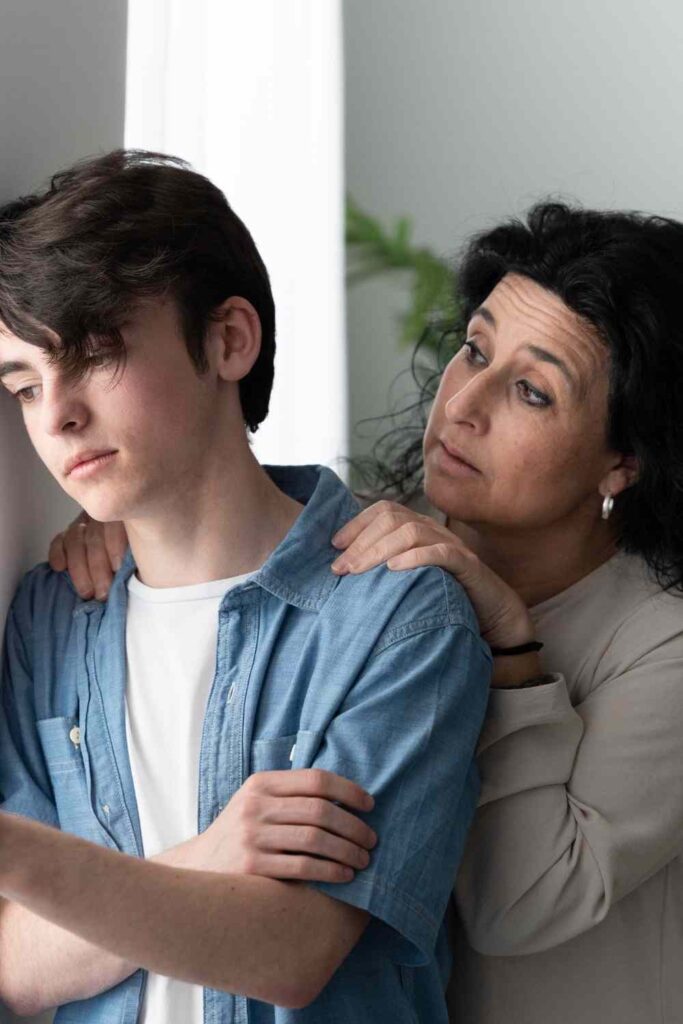
My son is afraid of standing in front of people to give a presentation.
During their last presentation in school on graduation day, I promised to take him out for ice cream if he presented well.
Sometimes parenting is encouragement and a little bribery.
But even with the promise of ice cream waiting for him, I knew I couldn’t punish him for being afraid because fear isn’t bad behavior.
Children are afraid of different things.
One child will grab the microphone like they’ve been waiting their whole life for an audience, while another child would rather disappear inside their mother’s handbag than stand in front of twenty people.
Sometimes we make children’s fears worse by embarrassing them for having them.
“There’s nothing to be afraid of!”
But there is something to be afraid of. To them.
I see a harmless school presentation.
My son sees dozens of eyes staring at him, the possibility of forgetting his words, and the terrifying thought of everyone laughing if he makes a mistake.
So telling him, “There’s nothing to fear,” doesn’t remove all that.
What helps is teaching him that being brave is doing it even when afraid.
5. Not Being Naturally Good at Something
As a creative who’s now expressing the musical side of my creativity, I’m sometimes asked how I come up with my songs.
And I tell them that it comes naturally to me.
Plenty of other things don’t come naturally to me too.
We all have things we are wired to do and other things we have to work ridiculously hard at. The same applies to children.
One child understands maths before the teacher finishes explaining it, while another stares at a maths problem like the numbers have personally offended them.
That child should not be punished for struggling.
Unfortunately, some of us parents confuse difficulty with laziness.
Children should be taught discipline, right?
If your child refuses to study or won’t put in effort, that’s a problem.
But effort and ability are two different things.
You can demand effort, but you cannot punish a child into having a natural ability they don’t have.
6. Coming to You After Getting Into Trouble
One of my biggest parenting goals is to raise children who think, “I messed up.” I need to call my mother.
Not:
I messed up. I must make sure my mother never finds out.
Because your children will mess up.
I know we don’t like to think about it, especially when they’re still little, and you can solve half their problems with a hug and a snack.
But they won’t always be little.
One day, the problems may be bigger.
Maybe they got into a car with someone they shouldn’t have trusted, drank at a party, someone is pressuring them sexually, or they’ve made a terrible decision and suddenly realize they’re in over their head.
In that moment, I don’t want the first thought in my child’s head to be, My mother is going to kill me.
I want it to be, I need my mother.
This doesn’t mean there should be no consequences.
If you break a rule or your choices put you in danger, we’re definitely going to have a serious conversation.
But first, let me get you home safely.
There will be time for consequences when you’re sitting safely in front of me.
Sometimes parents are so determined to make sure their children “fear” them that they become the last people their children would call in an emergency.
That’s not the win we think it is.
Fear doesn’t always produce good children. Sometimes it produces secretive children.
Parenting is such a humbling job because half the time you’re trying to teach another human being how to manage emotions and make wise decisions while you’re still working on some of those things yourself.
No parent gets it right every time, but I always ask myself, ”What kind of relationship do I want to have with my children when they no longer have to obey me?”
Childhood doesn’t last forever.
One day, you won’t be able to send them to their room or control what decisions they make.
At that point, the relationship you’ve built will matter.
Discipline your children, but don’t punish them for being human.